Why Does My Child Get Angry So Quickly?
If you've ever found yourself wondering:
"Why does my child go from happy to furious in seconds?"
you're not alone.
Many parents feel confused when a seemingly small problem suddenly turns into tears, shouting, slammed doors or a full-blown meltdown.
One minute everything seems fine.
The next, your child is angry and you're left wondering what just happened.
The truth is that anger is often not the real problem.
It's simply the emotion that shows up on the surface.
Anger Is Often A Signal
Imagine your child's emotions like an iceberg.
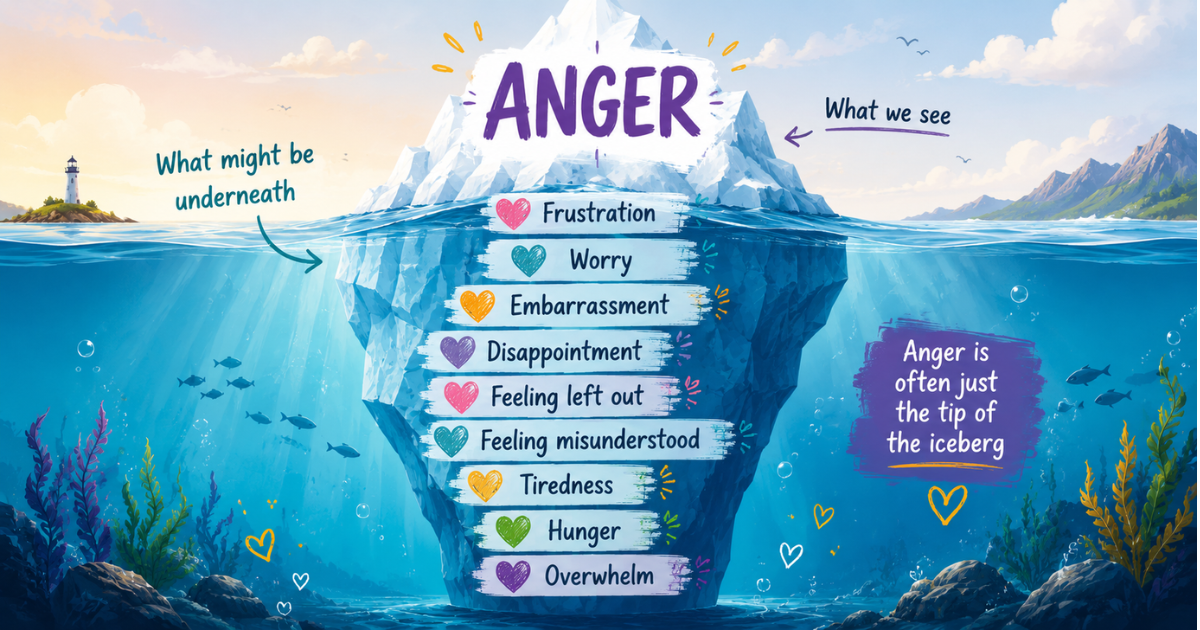
The anger is the part you can see.
Underneath may be:
Frustration
Worry
Embarrassment
Disappointment
Feeling left out
Feeling misunderstood
Tiredness
Hunger
Overwhelm
Children don't always have the words to explain these feelings.
Instead, those feelings can come out as anger.
Small Problems Aren't Always Small
As adults, we sometimes look at a situation and think:
"Why are they so upset about that?"
But children experience the world differently.
To a child:
Losing a game can feel devastating.
Being left out can feel heartbreaking.
A change of plan can feel overwhelming.
Being told "no" can feel unfair.
What seems small to us may feel huge to them.
Sometimes Their Bucket Is Already Full
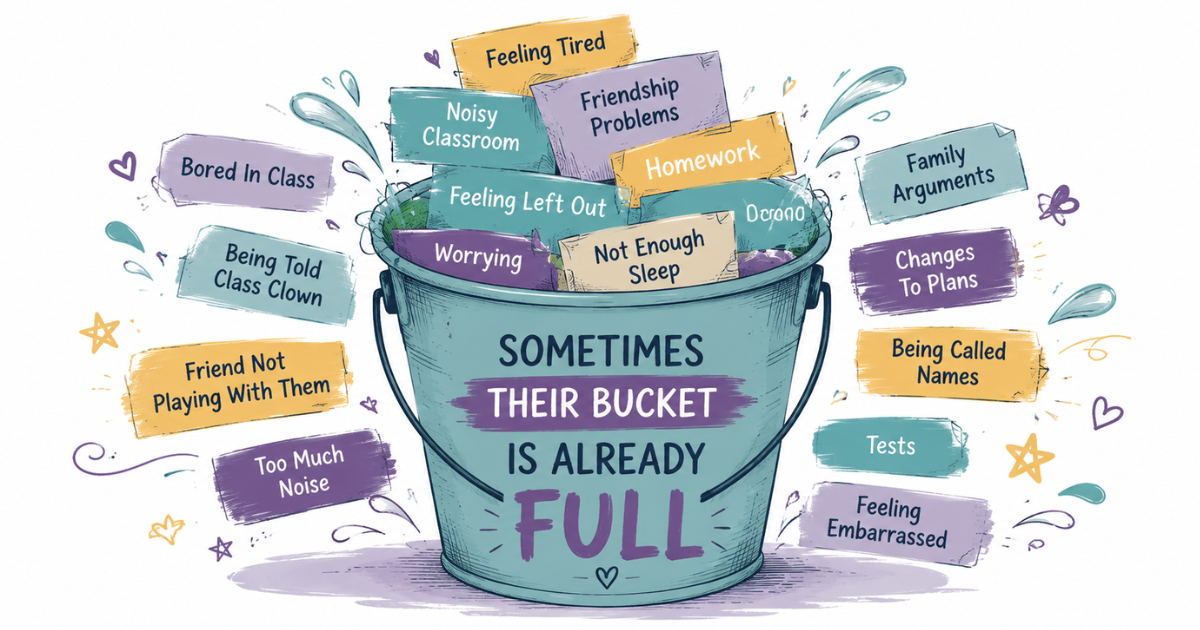
Imagine your child carrying an invisible bucket throughout the day.
Every challenge adds something to it.
A difficult morning.
A disagreement with a friend.
A noisy classroom.
Feeling tired.
A busy schedule.
By the end of the day their bucket may already be full.
The thing that finally triggers the anger might not be the real problem.
It may simply be the final drop that caused the bucket to overflow.
Not Every Child Needs The Same Thing
One of the biggest mistakes adults make is assuming every child calms down in the same way.
Some children need:
A hug
Reassurance
Someone to listen
Others need:
Space
Quiet time
Physical activity
Time to process things alone
Think about what helps your child feel better when they are calm.
The answer is often hiding there.
What Doesn't Usually Help
When a child is angry, it's natural to want the behaviour to stop immediately.
However, phrases such as:
"Calm down."
"Stop being silly."
"It's not a big deal."
"There's nothing to be upset about."
often make children feel misunderstood.
When people feel misunderstood, they tend to become more emotional, not less.
Try Curiosity Instead
Once your child has started to calm down, try asking:
"What happened?"
"How were you feeling?"
"What would have helped?"
"What do you need right now?"
These questions encourage understanding rather than conflict.
The Goal Isn't To Stop Anger
Anger is a normal human emotion.
The goal isn't to stop children feeling angry.
The goal is helping them recognise their feelings, understand what they need and learn healthier ways to respond.
Like all emotional skills, this takes time.
And just as children are learning, parents are learning too.
So if your child gets angry quickly, take a breath and remind yourself:
Anger is often telling us something important.
The challenge is learning how to listen to the message underneath.
💛 Enjoyed This Article?
If this article resonated with you, you're not alone.
Paint The Moon was created to help parents understand children and teenagers with busy, intense and wonderfully different brains.
Join our free newsletter for practical articles, gentle guidance, new resources and real-life insights to help you better understand what may be happening beneath your child's behaviour.
Whether you're navigating big emotions, busy minds, overwhelm or everyday parenting challenges, I'll send you new articles and tools as they're released.
✨ Join the Paint The Moon newsletter below and let's make sense of it together.


