"I'm Bored" – What It Really Means
"I'm bored."
It's something many parents hear regularly.
And it can feel frustrating.
Because from the outside, it often looks like:
There are plenty of things they could be doing.
They just don't want to do them.
Which can make it seem like:
• Laziness
• Lack of motivation
• Or simply being difficult
But for many teenagers with busy minds, boredom doesn't feel calm.
What It Actually Feels Like
For them, boredom can feel like:
• Restlessness
• Irritation
• Discomfort
• Needing something to happen
It's not a quiet "nothing to do" feeling.
It's more like:
"I don't know what to do with this energy."
What's Happening Underneath
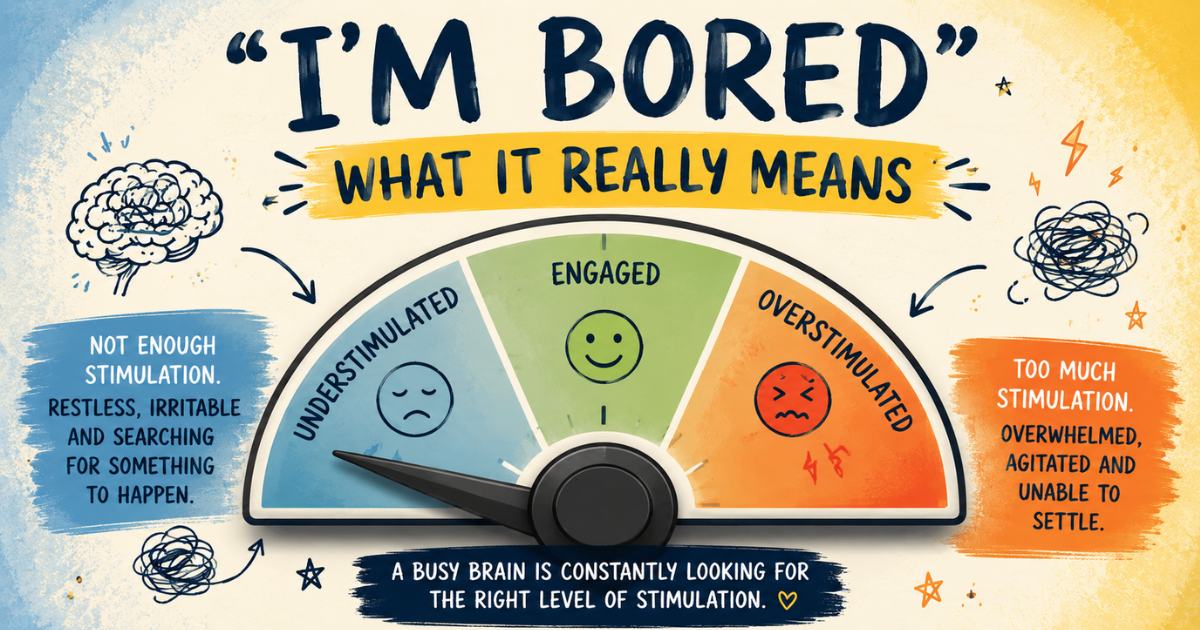
A busy brain is constantly looking for stimulation.
It's wired for:
• Interest
• Movement
• Engagement
• Variety
When those things aren't there, the brain doesn't settle.
It searches.
What This Looks Like Day To Day
That "I'm bored" can quickly turn into:
• Pacing
• Scrolling
• Starting things but not finishing them
• Interrupting you
• Winding others up
• Becoming irritated
From the outside, it can look like behaviour.
From the inside, it feels like discomfort.
Why Nothing You Suggest Works
You might suggest:
"Go outside."
"Watch something."
"Do your homework."
And the answer is often:
"No."
Not because they're being difficult.
But because their brain is looking for something very specific.
The right level of stimulation.
If something feels:
• Too boring → They won't engage.
• Too much effort → They won't start.
• Not interesting → They switch off.
Why Gaming Feels Different
This is something many parents notice.
"They're bored… but they'll game for hours."
That's because games provide:
• Instant feedback
• Reward
• Challenge
• Structure
• Stimulation
Everything the brain is looking for.
When Boredom Turns Into Behaviour
If that need isn't met, boredom can turn into:
• Frustration
• Agitation
• Low mood
• Arguments
Which is why "I'm bored" often leads to conflict.
What Helps
The goal isn't to remove boredom completely.
It's to understand it and respond differently.
Tip 1: Change The Question
Instead of:
"What do you want to do?"
Try:
"Do you feel like moving, talking or doing something with your hands?"
This helps narrow it down.
Tip 2: Add Movement First
Movement helps reset the brain.
Even small things like:
• A walk
• Kicking a ball
• Stretching
can reduce that restless feeling.
Tip 3: Lower The Pressure
Sometimes boredom gets worse when there's pressure to be productive.
Allowing low-pressure activity can help the brain re-engage naturally.
Tip 4: Accept The Pattern
For some teenagers, boredom is part of how their brain works.
It doesn't mean something is wrong.
It means their brain needs:
• More stimulation
• More variation
• More engagement
Bringing It All Together
"I'm bored" isn't always about having nothing to do.
It's often about:
A brain that doesn't feel settled without stimulation.
And once you understand that...
your response begins to change.
Instead of seeing laziness, you may start seeing discomfort.
Instead of seeing unwillingness, you may start seeing a brain searching for the right level of engagement.
Because sometimes "I'm bored" isn't really about boredom at all.
Enjoyed This Article?
Paint The Moon was created to help parents understand children and teenagers with busy, intense and wonderfully different brains.
Join our newsletter for practical articles, tools, downloads and gentle support designed to help you make sense of behaviour, reduce overwhelm and better understand what may be happening beneath the surface.
Whether you're navigating big emotions, busy minds, fixations, overwhelm or the ups and downs of the teenage years, you're not alone.
Join the Paint The Moon community below.


