Focus, Hyperfocus and "Not Listening"
One of the most confusing experiences for parents and carers supporting a teenager with a busy brain is this:
They can seem completely unable to focus on certain things…
And yet, at other times, they are so focused that it's almost impossible to reach them.
You might notice:
• Calling their name multiple times with no response.
• Giving instructions that don't seem to register.
• Them appearing to ignore you completely.
• Then reacting when they're told off for not listening.
This can feel incredibly frustrating.
From the outside, it can look like:
"They're ignoring me."
"They're choosing not to listen."
But often, that's not what's happening.
What Hyperfocus Actually Is
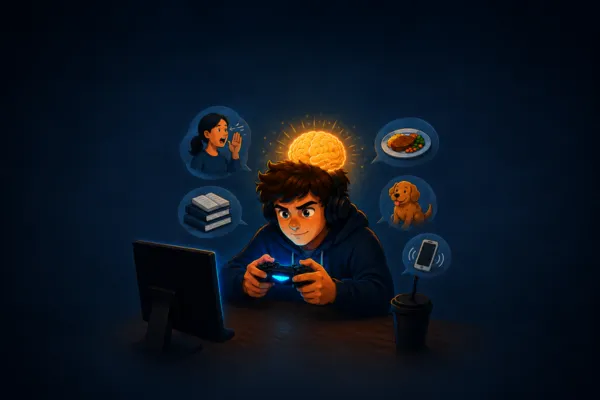
Hyperfocus is a state where the brain becomes fully absorbed in something.
This usually happens when an activity provides:
• Stimulation
• Interest
• Reward
• Engagement
During hyperfocus, the brain:
• Blocks out distractions.
• Narrows its attention.
• Becomes deeply immersed.
From the inside, it can feel as though everything else fades away.
Why They Don't Hear You
When a teenager is in this state, their brain isn't scanning the environment in the usual way.
So even if you:
• Call their name.
• Speak clearly.
• Repeat yourself.
They may genuinely not register that you've spoken.
This isn't defiance.
It isn't rudeness.
It's attention being fully locked somewhere else.
Why This Feels So Confusing
This is often what leaves parents feeling puzzled.
One minute, your teenager can't seem to focus on their homework for more than five minutes.
The next, they've spent three hours gaming, drawing, coding or researching something they love without taking a break.
It can seem contradictory.
But it isn't a lack of attention.
It's attention working differently.
Their brain isn't deciding whether to pay attention.
It's responding to what captures its interest.
What Happens Next (And Why Conflict Starts)
The difficulty comes when the adult understandably sees this as:
"They're not listening."
"They're being rude."
And responds with frustration or consequences.
By the time the teenager becomes aware of what's happened, they may:
• Feel confused.
• Feel unfairly blamed.
• React defensively.
Now a situation that began as a misunderstanding has turned into an argument.
A Real-Life Example
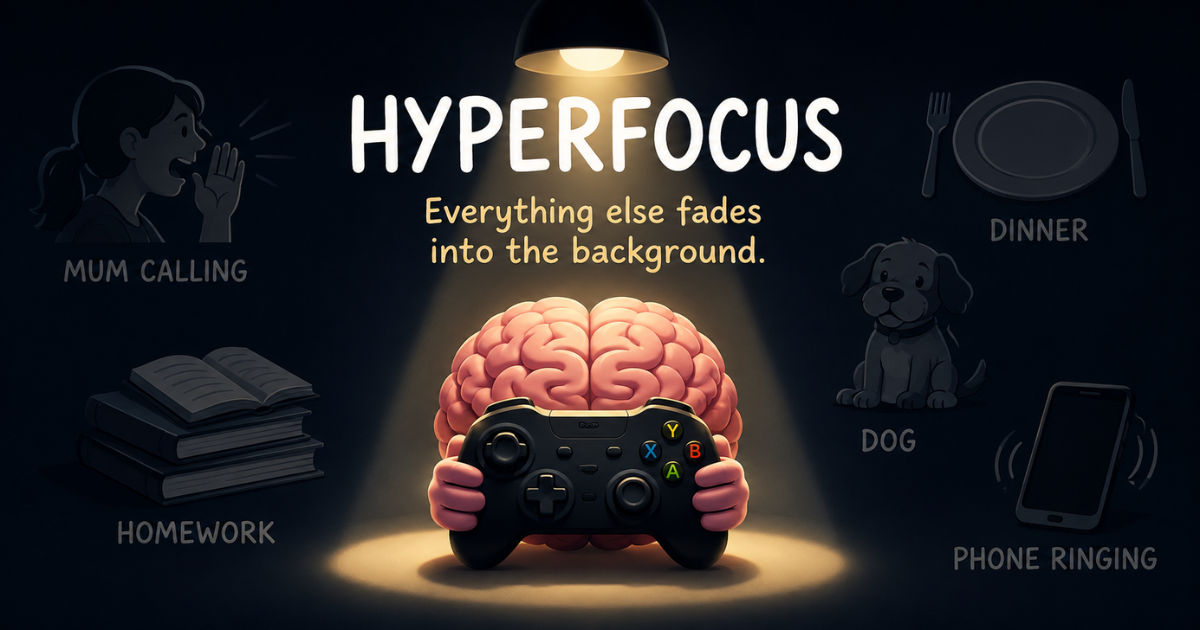
Imagine your teenager is gaming, drawing or watching something they're completely absorbed in.
You call them from another room.
No response.
You call again.
Still nothing.
By the third time, your tone changes.
Now, when they finally respond, they're stepping into a situation that already feels tense.
From their perspective:
"I've just been told off, and I don't even know why."
What Helps Instead
Rather than relying on your voice alone, try to enter their attention first.
This might mean:
• Saying their name and waiting for eye contact.
• Walking into the room before speaking.
• Gently tapping the table or standing nearby.
• Pausing until you know they've registered you.
Then give the instruction.
A few extra seconds at the beginning can often prevent an argument later.
Another Helpful Shift
Rather than saying:
"Why aren't you listening?"
Try:
"I don't think I had your attention. Can I try again?"
It's a small change.
But it immediately lowers defensiveness.
It keeps the conversation calm and gives your teenager the chance to engage without feeling criticised.
Bringing It All Together
Hyperfocus isn't about choosing to ignore people.
It's about a brain becoming so deeply engaged that everything else temporarily fades into the background.
Understanding that difference can completely change the way these moments are handled.
Instead of frustration, there is curiosity.
Instead of blame, there is understanding.
And instead of another argument, there's a much better chance of connection.
Enjoyed This Article?
Paint The Moon was created to help parents understand children and teenagers with busy, intense and wonderfully different brains.
Join our newsletter for practical articles, tools, downloads and gentle support designed to help you make sense of behaviour, reduce overwhelm and better understand what may be happening beneath the surface.
Whether you're navigating big emotions, busy minds, fixations, overwhelm or the ups and downs of the teenage years, you're not alone.
💛 Join the Paint The Moon community below.


