Anxiety and the Need to Know
"What's Happening Next?"
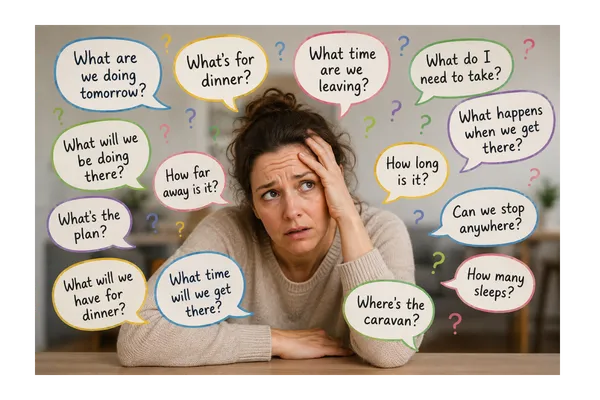
Some children seem to need constant information about what's coming next.
You might hear:
• "What's for dinner?"
• "What are we doing tomorrow?"
• "What time are we leaving?"
• "How many sleeps until our holiday?"
• "What do I need to take?"
• "How long until we get there?"
• "What happens when we arrive?"
And often...
It isn't just once.
It's repeated.
Over and over again.
What This Looks Like From the Outside
To an adult, it can feel like:
• Constant questioning.
• Overthinking.
• Worrying unnecessarily.
You might even find yourself thinking:
"I've already answered that."
Or:
"You've asked me that five times already."
Over time, it can become frustrating.
Especially when you feel as though nothing you say seems to stick.
What's Happening Underneath?
For a busy brain, uncertainty can feel deeply uncomfortable.
Not just mildly uncomfortable...
But unsettling.
Distracting.
Difficult to ignore.
When the brain doesn't know what's happening next, it naturally tries to fill in the gaps.
And those gaps don't always feel safe.
So asking the question again isn't usually about forgetting the answer.
It's about checking that the answer hasn't changed.
Every time they ask, they're looking for something much bigger than information.
They're looking for certainty.
And certainty helps the nervous system settle.
A Holiday Is A Perfect Example
For many families, going on holiday is exciting.
For some children, it's exciting...
And worrying.
You might hear:
"How long until we get there?"
"Where's the caravan?"
"How many bedrooms does it have?"
"Can we see the beach?"
"What are we having for dinner?"
"What time will we arrive?"
The questions keep coming.
Not because they're trying to be difficult.
But because their brain is trying to build a picture of what comes next.
The clearer that picture becomes...
The calmer they often feel.
What Helps Instead
The instinct is often to say:
"You've already asked me that."
Or:
"Stop worrying."
But remember...
They're usually not asking because they didn't hear the answer.
They're asking because the answer helps them feel safe.
Tip 1: Repeat The Timeline
If they ask again...
Answer again.
Even if it's the twentieth time.
A calm, consistent answer is often far more helpful than reminding them how many times they've asked.
Tip 2: Make The Plan Visible
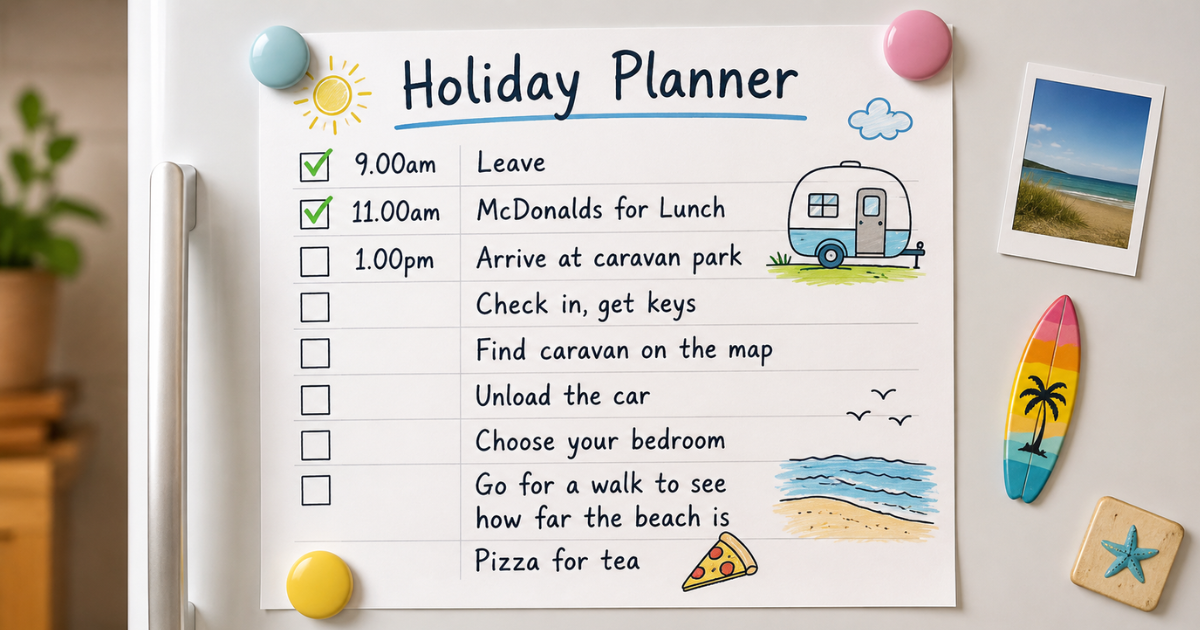
Some children find it much easier when they can see what's happening.
Try writing down:
• What time you're leaving.
• What you'll be doing first.
• What to pack.
• The journey.
• What happens when you arrive.
A simple timeline on the fridge, a whiteboard or even a piece of paper can become something they can check whenever they need reassurance.
Now they don't have to hold the whole plan in their head.
Tip 3: Let Them Help Build The Plan
Some children feel calmer when they can take part.
Ask them to help:
• Write the packing list.
• Tick things off.
• Count down the sleeps.
• Draw the day's plan.
The more predictable the day feels, the less the brain has to guess.
Tip 4: Remember What They're Really Asking
The question often isn't:
"What time are we leaving?"
It's:
"Can you help my brain feel certain?"
Sometimes that tiny shift in perspective changes the whole conversation.
Bringing It All Together
Some children don't ask lots of questions because they aren't listening.
They ask because uncertainty feels uncomfortable.
Every answer helps their brain build a clearer picture of what's coming next.
And the clearer that picture becomes...
The calmer they often feel.
Sometimes the greatest reassurance isn't giving a different answer.
It's patiently giving the same answer, knowing that each repetition helps their nervous system settle.
Enjoyed This Article?
Paint The Moon was created to help parents understand children and teenagers with busy, intense and wonderfully different brains.
Join our newsletter for practical articles, tools and gentle support to help you better understand what's happening beneath your child's behaviour.
Join the Paint The Moon newsletter below.


